Can a Broken Leg Break a Relationship?

In life, unexpected events have a knack for shaking up our routines and testing the strength of our relationships. Sometimes, it’s a sudden job loss or a health scare. This time, for my partner, Raashi it was both. Unexpected layoffs at her company on a random Tuesday, and a broken leg from a car accident the following day, that turned our world upside down.

When Raashi broke her ankle in that accident, it wasn’t just her bones that fractured; our daily lives were shattered too. Suddenly, I found myself thrust into the role of primary caretaker, navigating a maze of doctor’s appointments, medication schedules, and soon to come physical therapy sessions. The emotional toll was immense as we grappled with fear, frustration, and uncertainty about the future. For the longest time, I was certain that while she’s in bed rest, the best thing for me to do is be a “potato” as well to give her company.

In those early days, it felt like we were teetering on the edge of a precipice, unsure of what strain this change would have on our relationship. Not feeling the physical pain that she was going through, I often denied her truth. She was being strong and I tried to push her to be strong(er) not giving the space that heeling needs. I just wanted her to get strong, up and running as soon as possible so we could continue with our life.

We had to learn to communicate in new ways, to lean on each other for support, and I had to accept help from our families when pride whispered (very quickly) that I should take care of her all alone.

Life as we knew it came to a screeching halt. Plans for travel and adventure were replaced with canceled reservations and nights spent at home, tending to Raashi’s needs. It was a stark reminder that love isn’t just about the grand gestures; it’s about showing up when the going gets tough, even if it means sacrificing our own desires in the process. I believed that, but didn’t think I had experienced it to this extent before. Honestly, I have so much more empathy and respect for caretakers now. Parents who take care of their parents with love and get little in return. So so so much more respect for my Ma and Mother in Law now.

But amidst the chaos and the challenges, something remarkable happened. Our love, though tested, proved to be resilient. It wasn’t always easy, and there were moments when we stumbled and faltered. Yet, through it all, we remained committed to each other, determined to weather the storm together.

We learned valuable lessons along the way—lessons about patience, compassion, and the true meaning of partnership. Not friendship, not any other relationship but Partnership. We discovered the power of vulnerability, of allowing ourselves to be seen in our weakest moments and finding strength in each other’s embrace.

As the weeks turn into months, Raashi’s leg slowly heals, but the scars left behind serve as a reminder of everything we had overcome together. 

Along with the flowers this spring, our relationship is blossoming again from the crucible of adversity stronger than ever, forged in the fire of shared struggle and unwavering love. And for all the love and support from our family and friends, we are grateful. Without your love, I am not sure how we would have navigated this time. Thank you for showing up again and again, spending your time chatting with us, playing games and just offering to help. I am in your debt.

So, can a broken leg break a relationship? In our case, it didn’t. It probably fractured it but with the love cast upon it, we are healing slowly with time. The accident became the catalyst for a deeper, more profound connection—one that transcended the boundaries of pain and adversity. It reminded us (harshly) that love isn’t about avoiding hardships but about facing them head-on, hand in hand, knowing that together, we can overcome anything, we can live anything.

Written with lots of love for my boo – Raashi

Leap Leap Tradition

Did you know that tradition dictates that women can propose to men on Feb 29th

I’m happy to see this tradition has happily been updated; nowadays partners of all kinds propose to each other simply when they are ready to take a “leap” of faith – Leap Year or not 😉

Raashi and I have a leap-year tradition as well. I call it “leap leap”. Every 29th of February, I write her a letter. In this letter – along with some of my own original poetry – I offer her 4 “wishes”, 1 of which she can claim within the next 4 years and I promise to fulfill it with no objections or make it happen somehow. The wishes I usually list are usually nothing small, nor too impossible – things that definitely require some time, effort, and/or money, things that usually wouldn’t happen otherwise. The list can include things like moving to a different state/country, traveling for months internationally, or growing the R/A family. 

Some of these are personally very bold commitments for me. But I think of these wishes as investments in my long-term relationship with Raashi. Just as public companies may offer employees stocks – which vest after 4 years – to provide lucrative compensation to hire and retain employees, I use these wishes to retain and grow our R/A love. We also have regular (and random) bonus refreshers, to keep things spicy and interesting in our relationship.

Do you have a leap-year tradition in your relationship? Hit reply and let us know. We’d love to hear more about your traditions.

Human Mirrors

The three types of listening

How often have you found yourself in a conversation where you’re sharing something vulnerable, and the person who is listening to you fails to truly listen… what do I mean by that? Well instead of reflecting your truth, they attempt to fix you or advise you on how you can do things better – or perhaps they miss the boat and bring the conversation back to them.

Maybe you’ve been on the listening side, where a loved one is sharing something significant – and out of good intentions, you start advising them how if they change this one thing then everything will be better — if any of these scenarios ring true, you’re not alone.

Listening – really respectfully listening to each other in our society is incredibly rare, like Sandy Stream says.

She says there are 3 types of listening she talked about in our interview. Each type of listening responds with a different energy and therefore creates a different feeling within the person sharing their truth.

1. Missed Connections

When you share your truth with someone and it feels like they weren’t listening or if they were – they dismiss you with a phrase like “I can’t believe you felt that way“, or “That wasn’t my experience” – it leaves you feeling unseen. People who listen with a Missed Connection style often bring the story back to themselves, instead of sitting with and reflecting your truth.

2. Fixing Energy

When you share your truth with someone who has Fixing Energy, you’ll notice that you may feel like you are not doing things correctly, like no matter what you share, they always find a flaw and then miraculously – a way to fix it. The main feeling that a person with Fixing Energy gives off is: I have the answers, if you just listen to me everything will be alright. These types of listeners may have good intentions, but they too miss the point on how to listen respectfully.

3. Human Mirror

And that brings us to the Human Mirror. When you share your truth with someone who is truly listening to what you have to say, you’ll feel seen, maybe even understood – heck maybe you’ll even learn something about yourself because that’s the beauty of listening and reflecting: you get a chance to meet yourself, from someone else’s perspective.

Moments of Transitions

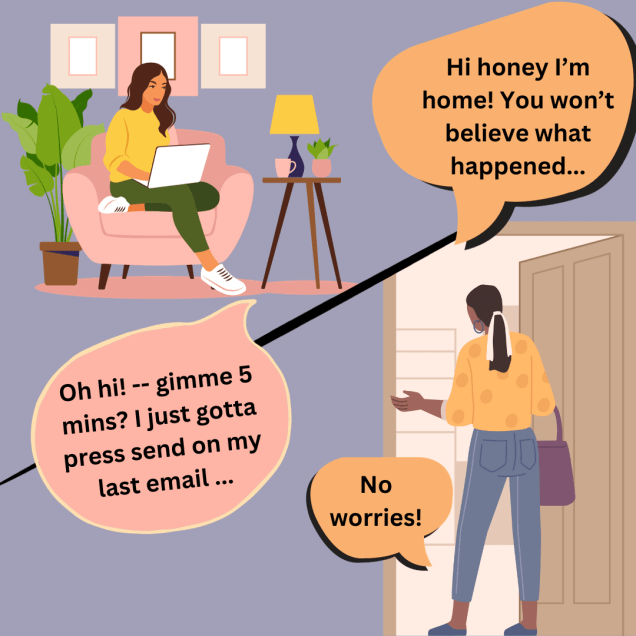
I have a simple question: when your partner comes home, do you A) stop what you are doing, get up, greet them, and take a moment to connect or B) say “hi honey” without glancing up from your screen – or from another room and then proceed with a line like ” I just need a few more minutes and then I’ll be free.” I’m totally guilty of often choosing option B.

It’s easy to be caught up in our head, working on projects – finishing up dinner, doing other chores, etc. that we forget – when someone comes home, this is a moment of transition in the day – an opportunity for us to lean in, and connect with our partner or our child in a meaningful way.

Yes – you aren’t wrong in wanting to finish dinner before it burns on the stove, or send that last email before logging off for the evening. Still, transitions in the day are natural opportunities for us to lean into our relationships. When someone comes home, when you pick your kid up from school, when you go to the airport to receive your loved one, etc. these are all opportunities that we can take to build relationships intentionally and in a loving manner that aligns with our values.

As Jim White and I discussed in our podcast interview, the best way to make use of these moments of transition is to take a few minutes before the moment arrives (aka after your spouse texts “on my way,” when you know the school bus is going to arrive in 10 mins, etc.) to set your personal expectations. This is tuning into your self-talk and checking in with how you want to show up in these next few moments. This self-check-in allows you to align with your values of compassion, kindness, empathy, listening, etc. It’s a critical preliminary step to successfully engage in a transition moment intentionally.

The second step is to take those first few minutes after getting in the car, or when your spouse comes home to be present, listen, and share – before each individual goes back into the humdrum of life.

Sounds simple right? Well, it can be, as long as we acknowledge that sometimes we will have to “disrupt” what we are doing to take a moment to quite literally make eye contact and connect with our people before finishing up that to-do list item.

Will you be my teacher?

“Most relationships collapse because in the end the two individuals didn’t want to know more about themselves.”

School of Life

Life is a great teacher. Obstacles & hardships, victories & triumphs are also great teachers. Every so often, a friend whispers sage advice, and a parent imparts a shard of wisdom – these relationships can also be great teachers.

So then why is it – that when my partner points out an observed insight, and mentions (with kindness, and not malicious intent) that even if I mean well, I can practice being a bit kinder, instead of snapping my judgment. At his words, I find my feathers rustled; instead of listening objectively, I do exactly the opposite: I SNAP to judgment, disagree that there is something wrong with my behavior, and firmly declare – NO there is nothing that I need to change.

What an amazingly missed opportunity to learn from one of the greatest teachers – my partner.

As they say at the School of Life: “Love can function as a route to self-knowledge”; what greater source of love will you find than where you are building your home, and with whom you are choosing to spend your life?

Your partner is someone who has the objectivity of witnessing you and your behaviors from outside, while still maintaining a vested interest in your happiness (because happy you = happy them = happy life). This is one of the many gifts that cultivating a healthy partnership brings to the realm of Love Vitamins for Self.

Table Talk

“How was your day?” – such a polite and boring question to ask. Its great for small talk but if you really wanna get to know someone it doesn’t open many doors for deep meaningful conversations.

I mean where do you even begin? Do I start at the top and tell you a list of all that happened from brushing my teeth- to surviving boredom – to the crippling anxiety of answering this question? Probably not the best choice. 

As a response to this question, you’ll often get. “Fine”, “Great”, “Okay, how about yours?”. Try this (rather do not try this) with your kids, or on a first date, or with your partners and you’ll see the conversation come to an end before it begins. These responses are counterproductive to conversing, since one-worded responses essentially are the death of a conversation. Or maybe you get a vague but specific example of my day: I had fried rice for lunch and it wasn’t very good, hoping dinner is better?

My parents, would ask me, “how was your day at school?” after I got back home, and it always felt interrogative, a one sided conversation. “Nice” was my default response to it all. And I could see they were not satisfied with it and wanted more. Not much has changed though. Now, when they ask me the same over phone, I usually respond with, “You know, the same. Busy with work and life.”

Yeah- you get the idea. Our end-of-the-day-dinner-chit-chat-conversation-opener needs a little help.

The problem isn’t with them or you. The problem is in the question. So what do you do? How do you build a healthier relationship with them? What’s the best question to ask, when you really actually wanna know more about them and their day? How do you have a heart-to-heart talk with someone?

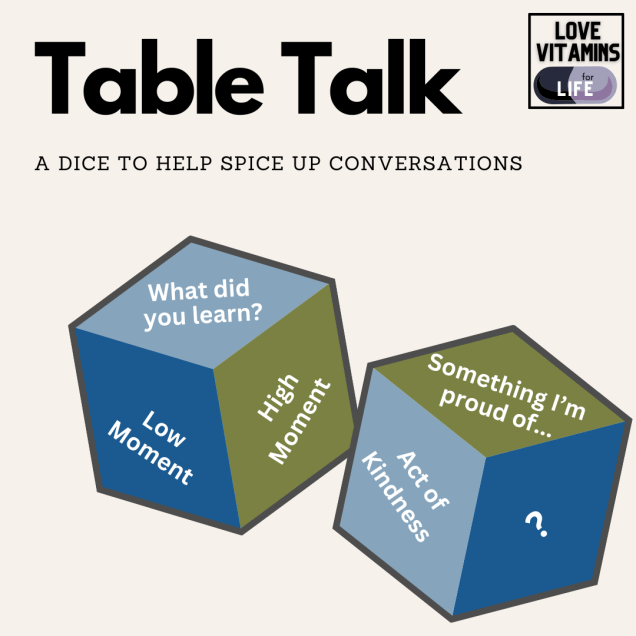
Table Talk Dice

We made a little dice with prompts to inspire conversations from different perspectives. This dice is a combination of both the points above and we use it on a daily basis to help build a our relationship every stronger with more meaningful conversations which build our trust and love for each other.

The Dice incorporates 2 ideas that we use to share love

1. Share before asking

Remove the burden form the other person and start by sharing about your day first. If you want and expect others to be vulnerable with you, try being open and vulnerable first. See how that builds trust with them. The quality of what you share and how deep and detailed you are with your story, will decide how your get a response to your story.

Remember, don’t just make it about you. We all like to share. It’s a great feeling when in a trusted environment. So give them a chance too while you listen. Share a bit and include them into the conversation with open ended questions like below.

2. Use open ended questions

Try some of the below questions instead:

  • What was the best part of your day today?
  • What made you smile today?
  • What did you learn today? (Something Raashi and I ask each other before every meal – our form of grace)
  • What was the most attractive thing you saw today?

A dice has 6 sides, and you can essentially add any type of thought-provoking statement or question to them, my choice (inspired by the book Whole Brain Child) includes:

  1. Low Moment
  2. High Moment
  3. Act of Kindness
  4. What did you learn
  5. Something you’re proud of
  6. Make your own

At the end of the day, these questions all lead to the same idea that “How was your day?” is trying to get to, which is discussing the moments of significance- the moments that left a print on our memories and feelings. The major difference between asking how was your day versus what was your high moment is whether you take the scenic route or enter a culdesac with a dead end.

Switch from the distraughtful experience of asking someone (or being asked) “How was your day?” to something that can actually help you build a stronger bond.

Reflection Retreat

I’ve often wondered why we wait till the new year begins to identify our resolutions? Perhaps there is something final about the end of the year that instills either fear or motivation to try harder – at least in January – to become the person we aspire to be and set our yearly goals.

Personally, I find it more inspiring to take a Reflection Retreat sometime near my birthday in April as a way to check in with myself and set goals that I want to work on and achieve for the next 12 months.

The idea behind setting New Year Resolutions and a Reflection Retreat is the same: working towards something you want to achieve. However, by putting all the responsibility of setting goals to happen around or before the New Year we create a motivation trap, making it harder to accept and realize that goal setting can happen at any time.

Reflection Retreat

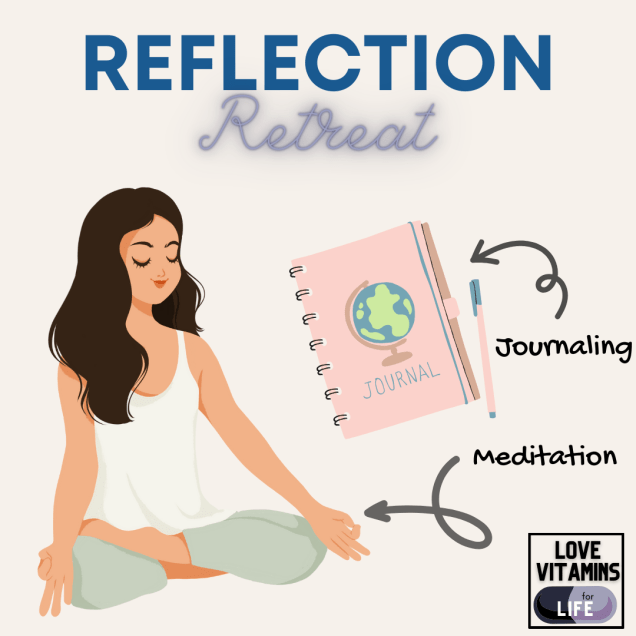
But a Reflection Retreat is more than just goal setting, it’s taking time out to intentionally check in (by journaling, meditating, taking a nature walk, etc.) to examine what happened last year, and then using those insights to set your intentions for the next year.

I normally go for a 3/4 day overnight trip; somewhere secluded and in nature as a way to disconnect from the demands of daily life. But if this isn’t possible for you, you can still benefit from following an unraveling practice.

An unraveling practice asks you to think about / journal what happened during the year that just passed: what changes did you welcome, what did you let go of, what did you discover, what do you wish you had less of, etc.

Once you’ve done that, you set your intention for the next year: identify what’s your word for the year, how will you embody it, what parts of you will you nurture, etc. This in turn informs the more specific goals that you will create to align with your intentions for the year.

I personally love Susan Conway’s book as my guide as I unravel the year behind and get ready to prep for my year ahead. Regardless of using a formal workbook, or simply journaling in the margins of a paper – the act of checking in on what has happened and then choosing your way forward is what makes a Reflection Retreat an incredibly powerful ritual.

Yes, you can leverage this practice as you work to identify your New Year Resolutions to meet that January deadline – or you can leverage this practice later in the year like I do and simply enjoy the holidays instead!

Love Language Linguist

Chances are you’ve probably heard the phrase “5 Love Languages.” Gary Chapman’s book inspired a revolution in how we think about expressing, receiving, and giving love.

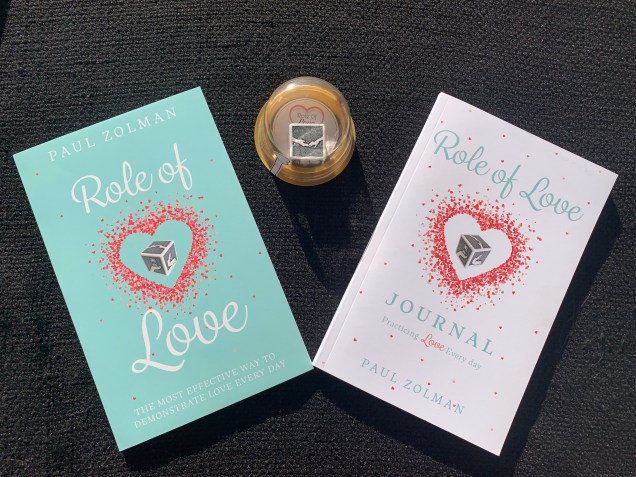
In my interview with Paul Zolman, he shared his inspiration behind creating the Role of Love Die (a dice with the 5 love languages on it) as a way to intentionally practice giving love.

The 5 Love Languages are:

  1. Words of Affirmation: People with this love language feel loved and appreciated when they receive verbal compliments, words of encouragement, and affectionate words. Simple expressions like “I love you,” “You mean a lot to me,” or praise for their efforts make them feel cherished.
  2. Acts of Service: For individuals with this love language, actions speak louder than words. They feel loved when their partner performs acts of service to help them or make their life easier. This can include doing chores, running errands, or any other actions that demonstrate thoughtfulness and effort.
  3. Receiving Gifts: This love language is about receiving gifts. They value tangible symbols of love and affection. These gifts don’t have to be extravagant; it’s the thought and effort that count. Thoughtful gifts, even small ones, make them feel loved and appreciated.
  4. Quality Time: Quality time is the primary love language for some individuals. They feel most loved when they have their partner’s undivided attention. This means spending meaningful time together, having conversations, going on dates, or engaging in activities that allow for a strong emotional connection.
  5. Physical Touch: Physical touch is the love language of those who feel most loved through physical affection. This can include hugs, kisses, holding hands, cuddling, and other forms of physical intimacy. The warmth and closeness of physical touch are essential to them.
Role of Love

In order to become a Love Language Linguist all you have to do is practice giving these 5 Love Languages away – and that is where the Dice comes in.

Here’s what you have to do –
🎲 Roll the die every day
🎲🎲 Take note of the Love Language rolled
🎲🎲🎲 Practice giving away that form of love all day to everybody

By giving love away in different love languages, you improve your ability to perceive love, accept love & give love. It’s a win-win, after all – love only multiplies when we share it.

If you don’t have access to the Role of Love Dice, you can always practice Love Stretching or the Cherish Time activity.

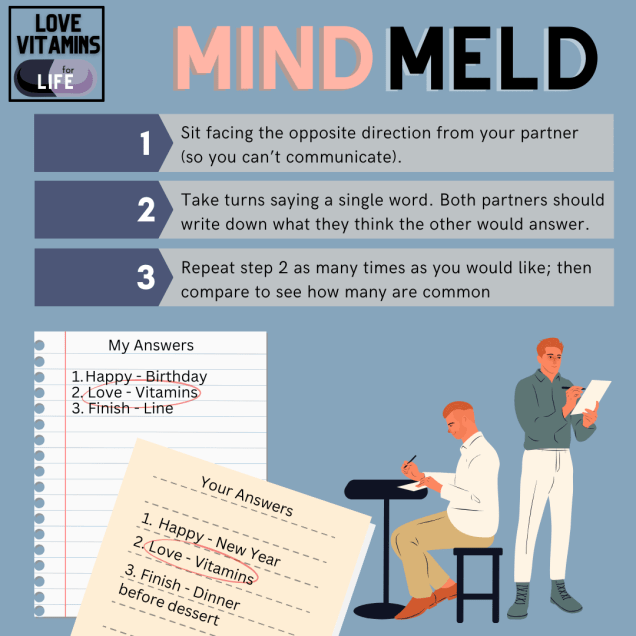
Mind Meld

We were at a party a few weekends ago and we played this incredibly simple – and yet enlightening game that I like to call Mind Meld.

The goal of the game is to see if you and your partner are in sync. Here is the set up:

  1. Sit facing the opposite direction from your partner (so you can’t communicate).
  2. Take turns saying a single word. Both partners should write down what they think the other would answer.
  3. Repeat step 2 as many times as you would like; then compare to see how many are common

Sounds simple right? How hard can it be to match the phrase “happy” – obviously the answer is “birthday” – well it turns out my partner thinks differently, he answered: “happy-feet”. To our surprise we only had 2 answers matching when the game ended.

What I loved most about this game was the simplicity of the play – and the chaos that ensued when it ended. It’s a simple but effective exercise to remind ourselves that we all approach things from different perspectives.

If you want to try this game out with a partner, or a friend feel free to use this list below to get started:

  1. Happy
  2. Love
  3. Finish
  4. Water
  5. Foot
  6. Paper
  7. Time
  8. Travel
  9. Bucket
  10. Wired

Advent-Your Calendar

It’s the holiday season – which means gift-giving is on everyone’s mind. This can be both stressful & exciting; but the one sentiment I know we all share in common is: what do I get them? This is why I simply love – Love Pills. The idea of finding happiness in small things has been a huge pillar in the success of my relationships – and my ability to give unique gifts.

So this holiday season I decided to do a spin on the Jar of Love Pills & Advent Calendar tradition that’s all the rage during the holidays.

If you don’t know what an Advent Calendar is – essentially it’s 24 little gifts, and you get to open one every day leading up to Christmas. I love the idea of celebrating every day – I’m not fond of figuring out 24 presents per person in my household, or even buying that many little knick-knacks.

So I Stole Like an Artist – and merged Love Pills with the Advent Calendar to get — Advent-Your Calendar!

Essentially I have 4 little jars, marked with our names & filled with simple everyday happiness to bring in some extra holiday cheer.

If you’re wondering why 4 – well that’s because I simply had to include a jar for my kitty-cat and puppy-dog!

The reason this is an Advent-Your Calendar and not an Advent Calendar is because instead of putting actual physical presents, I’ve used little slips of paper to depict an adventure. And since there are 4 Jars and 24 Days till Christmas, we each get 6 Advent-Your(s).

For example, in my kitty-cat jar, I have “High Tea” – which means Astro gets to experience some catnip tea. In my puppy-dog jar, I have “Tippy Tap Tape Dance” – which means Kara gets a tape ball (why she likes this I have no idea) and we get to play tippy tap on the floor – which is essentially her trying to paw the tape ball and then freaking out and doing a little tape dance. She loves it! Check out this reel of how much fun she had with all the tape when we were moving last year.

For us, gift-giving is more about remixing the mundane -simple little activities that bring us joy with an element of surprise. I honestly can’t think of a better way to enjoy a little Advent-Your with the ones you’re sharing the holiday season with.