In the first half of our conversation with them, we talk about what makes their relationship special and did a dive into love vs intimacy and much more. In this second part, we share how they demonstrated to use the exercise of Cherishment.
Our next Framework of Cherish Time (which will be available in a couple days) is inspired from this beautiful exercise of using the 5 senses to express your love to your partner and build a more intimate and healthier relationship.
Listen to the full episode to feel the love pouring out of them which they practice this wonderful exercise – there were some tears being shed in the background too. We tried our own version of Cherish Time and that'll be available on our Social Media Channels too. Follow us on Instagram to check it out.
Takeaways
Think about this – what advice would you give yourself for your relationship to make it more healthier? Let us know in the comments below. At LoVita, we're not in the business of giving advice, we're about inspiring partners of all kinds by sharing their stories and journey in building a healthier relationship. So if you're interested, we'd love to share yours too.
—–
If you enjoyed listening to this episode (or the podcast), please share your diagnosis with 1 close relationship or anyone else who would enjoy listening to this as well.
If you would like to share your story, fill out this quick form.
The best gift you can give us is positive feedback and your observations. Follow us wherever you are listening and do us a favor by adding a Review on Apple Podcast.
LoVita – Love Vitamins for a healthier is a community by Partners for Partners. We share stories about how Partners are working intentionally towards building a healthier relationship. To learn more check out the links below 🔗
LoVita Blog for Frameworks
Sign up for our monthly Newsletter for exclusive content
We're also on Social media – Instagram, Facebook,
All above links in a single page
Connect with Francesca and Stan Levine
Website: relationshiprescueinstitute.com.au
Facebook: relationshiprescueinstitute
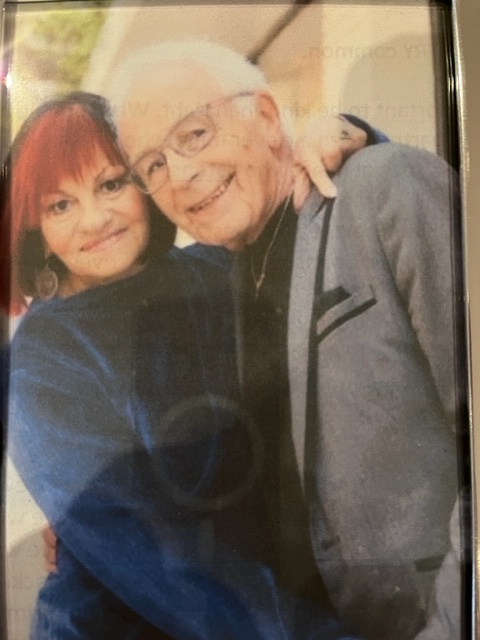
Francesca (left) and Stan (right) Levine are relationship practitioners in Australia with over 58 years of combined experience as a Psychologist and a Counsellor respectively. They have been married for 55 years and have been referred to as Relationship Masters, voted in the top 3 relationship practitioners in Melbourne.
In the first half of our conversation with them, we talk about what makes their relationship special and did a dive into love vs intimacy and much more. In this second part, we share how they demonstrated to use the exercise of Cherishment.
Our next Framework of Cherish Time (which will be available in a couple days) is inspired from this beautiful exercise of using the 5 senses to express your love to your partner and build a more intimate and healthier relationship.
Listen to the full episode to feel the love pouring out of them which they practice this wonderful exercise – there were some tears being shed in the background too. We tried our own version of Cherish Time and that’ll be available on our Social Media Channels too. Follow us on Instagram to check it out.
Takeaways
Think about this – what advice would you give yourself for your relationship to make it more healthier? Let us know in the comments below. At LoVita, we’re not in the business of giving advice, we’re about inspiring partners of all kinds by sharing their stories and journey in building a healthier relationship. So if you’re interested, we’d love to share yours too.
Manage your relationships like a successful business with Aaron Shelley –
Love Vitamins for Life
At LoVita, we believe the workings of a successful relationship are similar to the workings of a successful corporation. Or at least they should be. Successful companies have a mission and vision. They have goals and targets. So should relationships. Have you ever considered what are your values in your relationship? Companies are always trying to do the best and accountable to the shareholders and customers. The shareholders and customers in your relationships are you and your partner. Similar to companies, most relationships need a strategy, which should be discussed periodically. Relationships need frameworks to provide structure. Each couple is unique and you have to innovate and be creative to personalize what works for your relationship.
Amongst the many insights that our guest, Aaron Shelly, shares with us he says "One of the big things that I wasn't understanding was the value in social connections and relating that social resources and how much like my mom invested in that." Our relationships in our community can actually have much greater magnitudes in our life than just having a monetary value. The payoffs from maintaining our relationships are massive and unknown. He adds "If you're not investing in social connections, it would be the same as if a company said, we're not gonna have sales and marketing. Which every company would say that's suicide."
Takeaways
The workings of a successful relationship can be very similar to the workings of a successful corporation. Relationships can benefit from having a strategy, vision, goals and more. Keeping track of logistics, identifying root causes of conflicts, and keeping track of growth with regular check-ins can help you build a healthier relationship.
Invest in your relationships with your partner and your community. The value of your network that you build with trust and time, has a much greater positive impact on our life than just having a monetary value.
If you enjoyed listening to this episode (or the podcast), please share your diagnosis with 1 close relationship or anyone else who would enjoy listening to this as well.
If you would like to share your story, fill out this quick form.
The best gift you can give us is positive feedback and your observations. Follow us wherever you are listening and do us a favor by adding a Review on Apple Podcast.
LoVita – Love Vitamins for a healthier is a community by Partners for Partners. We share stories about how Partners are working intentionally towards building a healthier relationship. To learn more check out the links below 🔗
LoVita Blog for Frameworks
Sign up for our monthly Newsletter for exclusive content
We're also on Social media – Instagram, Facebook,
All above links in a single page
Connect with Aaron Shelley
Book – The Family Flywheel
Website: https://thefamilyflywheel.com/
Facebook: aaron.k.shelley
LinkedIn: aaronshelley
Aaron has a BS in Mechanical Engineering and an MBA. He has worked with small businesses and startups where he developed a unique systems perspective on business and family. His work in the academic and business worlds led him to understand how related our families and business dynamics are.
He and his wife have run the largest Irish Dance school in Utah for over 20 years. He has built multiple companies, consulted across multiple industries and helped raise $54 million as the COO of a technology company. He lives in Utah with his wife and four children.
His book “The Family Flywheel” presents a proven process for building an unshakable foundation in your life. By combining three elements—strategy, structure and culture—you can learn how to create wealth, build better relationships, improve your health, learn more abilities and enjoy more freedom than ever before!
Make your relationship like a super effective business
Aaron says, “if people understand how families work, what are their different levers and how to make them effective, just like a business, they can be super effective. They can be super effective and they don’t have to fall apart and we don’t have to have divorces like we have. That’s really the big push that I have now is I just feel like families are the pillars of our society and if we keep knocking ’em out, it, it’s hard to get back your society cause it’s gonna collapse on itself.“
At LoVita, we believe the workings of a successful relationship are similar to the workings of a successful corporation. Or at least they should be. Successful companies have a mission and vision. They have goals and targets. So should relationships. Have you ever considered what are your values in your relationship? We covered a framework on our blog about Value Stones earlier to cover this in more detail. Companies are always trying to do the best and accountable to the shareholders and customers. The shareholders and customers, in your relationships are you and your partner. Similar to companies, most relationships need a strategy, which should be discussed periodically. Relationships need frameworks to provide it structure. Each couple is unique and you have to innovate and be creative to personalize what works for your relationship.
Aaron asks, for anyone in relationships, what is your strategy? The reason he created the Family Flywheel is to help partners align on their strategy, structure and culture because those are the big things that matter. He explains the concept of the flywheel, which stemmed from his experience as a Mechanical Engineer, where there is a flywheel of things which keep getting faster and faster and it’s this momentum that you can’t stop which keeps building further momentum.
Often what we lack in our home systems is the fact that we don’t have the same vocabulary. We’re not often using the same language and understanding of concepts like what do we want as a family? What are our values? What is our culture? What is our strategy? What are we trying to accomplish? These implicit or mostly implicit buy-ins that everyone has – like, oh, okay, we’re going to be a Christian House household perhaps – but there’s no explicit buy-in on what does that actually mean. Every family has its own flavor and the concept of the flywheel helps in creating another language that people can use to kind of set up that healthy household and foundation.
Aaron and his wife had at some point decided to setup their life around running an Irish Dance business from a studio behind they home. They made strategic decisions to get there. And even when doing so, their priorities were set. Aaron told us that, “my wife has always said like, if my family needed me, I would give up the business tomorrow. It’s very clear what her prioritization is.” What they wanted was a family and they figured out the best way for them to do just that.
Challenges why couples are not in alignment
What are the biggest challenge on why couples or partners are not in alignment often or do not have these priorities set straight. Aaron shares the below challenges with us. Listen to the full episode to learn more why these can be challenging
People are getting into relationships to marry people who are like them
People are waiting till they are much older to get married
We talk about an analogy of how relationships just like companies go through mergers and acquisitions. The fact that thinking about it from the business perspective – with business acumen – gives us concrete analogies to anchor down on so that we can get a little bit more practical with our wishlist of what are we looking for in our partner, or where are we in our life? Just like we do career planning, we can start doing, life planning. We can try to figure out what kind of a partner, what kind of a family am I looking for and thinking about it in terms of asset, strengths and weaknesses, opportunity costs rather than just being like, I just want someone tall, dark, and handsome – which might not be good enough.
Aarons adds, “the worst mistake you make in a business is hiring the wrong person. And the worst mistake you make in a marriage or in your relation in your life is gonna be hiring the wrong person, marrying the wrong person.” When people are in the job market (seeking or hiring), a lot of them know the answers to questions like – What am I looking for? What criteria should I be thinking of? etc – but not often we ask these questions when getting into relationships. Most people are getting into relationships with thoughts like “She’s hot” or “He’s handsome” which can be a start but there should be more.
If you’ve never taken the time to actually sit down and talk – about what are you both working towards – and put it on a page, then you are not working towards the same thing as you just think you are.
Check In after alignment
Once you’ve got alignment in your relationship – got buy-in from your partner and have your priorities set – how do you evaluate whether you are on the right track? How do you know if your relationship is successful or whether there is scope for improvements? What processes and what mechanisms do you have in your life to make sure you’re on track and you’re constantly getting feedback and updating – like a check-in?
Aaron goes back to the business point and draws an analogy with meetings in companies to family meetings. In Aaron’s case, his family has weekly, quarterly and annual meetings too. In these meetings they discuss what did we do in the last period, what did we learn, what are the highlights, what are the conflicts and then what are they trying to do in the next period. It keeps all their individual and family goals communicated with each other and help each other align to meet those. He adds, “if you look at most companies, I think meetings are usually hated. But if we get rid of all the meetings, then everyone doesn’t feel aligned. And I think it’s the same in a family. I also have a basic coordination meeting with the kids, but it’s like you need to coordinate the logistics. You need to coordinate and make sure there’s no like long enduring issues in the relationships that just aren’t dealt with.” Aaron for their family annual planning had put together a movie about things like where we had been for the past year with our values. This was so inspiring for the kids and they mentioned that they were proud to be a part of this great thing. As parents, Aaron and his wife are creating an identity for their children that they want to be involved in, that they think is aspirational and that is gonna help them in their life.
Growth in Relationships
Growth for companies is a very important thing. They have to be accountable to their shareholders showing that they’re profitable, getting more customers, building a stronger brand and so on. But if we think about growth in terms of your relationship, how do we measure and quantify that? Aaron says, “I break it into the financial resources, the social resources, and then the human resources.” He gives up many personal examples on what his take are on each of those and how we should invest in ourselves and our relationships. Listen to the full episode to learn more.
Final Thoughts
In the last few minutes of our recording with Aaron, he shares, “One of the big things that I wasn’t understanding was the value in social connections and relating that social resources and how much like my mom invested in that.” Our relationships in our community can actually have much greater magnitudes in our life than just having a monetary value. The payoffs from maintaining our relationships are massive and unknown. He adds “If you’re not investing in social connections, it would be the same as if a company said, we’re not gonna have sales and marketing. Which every company would say that’s suicide.”
Takeaways
The workings of a successful relationship can be very similar to the workings of a successful corporation. Relationships can benefit from having a strategy, vision, goals and more. Keeping track of logistics, identifying root causes of conflicts, and keeping track of growth with regular check-ins can help you build a healthier relationship.
Invest in your relationships with your partner and your community. The value of your network that you build with trust and time, has a much greater positive impact on our life than just having a monetary value.
In our conversation with Jerry Dugan, he says, "like live in a way that. She's gonna be like, all right, yeah, I choose him again for another day." So we asked him what his thoughts were on how to make sure that the love between partners doesn't just stay at a constant rate.
The biggest thing is making sure I'm listening more than I'm speaking in the relationship.
Listen to the full episode for Jerry's story on how he was putting them first and, and also communicating something he would want to do.
We also learn about – H.A.L.T – A framework which can be used to reduce conflict in relationships. Before you say, anything to your partner, halt and check for the below
H – Am I hungry?
A – Am I angry about something else?
L – Am I feeling lonely?
T – Am I tired?
And if the answer to any of those things is a YES, then the conflict or conversation between you and your partner isn't about whatever's going on – it's about something else entirely. So what can you do? Simple answer is to take care of yourself and let your partner know. If you're hungry – get a snack. If you're angry or feeling lonely or tired – let your partner know.
Takeaways
The biggest thing to do in a relationship is making sure you're listening more than speaking
Put your loved ones first and communicate with them if there is something you would like to do
Use HALT – the self assessment tool to halt the conversation if you find yourself Hungry, Angry, Lonely or Tired.
If you enjoyed listening to this episode (or the podcast), please share your diagnosis with 1 close relationship or anyone else who would enjoy listening to this as well.
The best gift you can give us is positive feedback and your observations. Follow us wherever you are listening and do us a favor by adding a Review on Apple Podcast.
LoVita – Love Vitamins for a healthier is a community by Partners for Partners. We share stories about how Partners are working intentionally towards building a healthier relationship. To learn more check out the links below 🔗
LoVita Blog for Frameworks
Sign up for our monthly Newsletter for exclusive content
We're also on Social media – Instagram, Facebook, TikTok
All above links in a single page
Connect with Jerry Dugan
Website - https://beyondtherut.com
Instagram - @beyondtherut
Facebook - @beyondtherut
TikTok - @beyondtherut
LinkedIn - jerrydugan
Jerry Dugan is the CEO and Senior Consultant of BtR Impact, LLC, a consulting and training company focused on helping leaders define success on their terms so they can live fulfilled, meaningful lives with impact and not lose their faith, their families, or their health. His work experience includes serving in the U.S. Army as a combat medic, corporate training facilitator, and organizational development leader. Jerry is also the the host and producer of Beyond the Rut podcast and currently lives in Dallas, Texas, enjoying the empty nester life with his wife Olivia. They have two adult children, three cats, a dog, and no car loans!
This is the second episode from our conversation with Jerry. In our last episode, we focused on how you should go tell your partner today that they come first. Here, we talk about the HALT framework and other ways how you can make sure that your partner chooses you every single day.
What do you do to grow the love?
Often in relationships we find that when at some point things start to be very monotonous and the excitement levels are not the same as they used to be.
Now, there’s nothing wrong with this stability. It’s great. Having stability in a relationship is an amazing accomplishment. But sometimes it can start to fee like things are spicy but not hot. You are happy but not necessarily excited. Your partner thinks your great but not necessarily attracted to you as they used to be.
And to make sure your partner chooses you every single day – you need to be attractive. Ansh would say be the best yourself. Your partner loves you for who you are. Don’t take them from granted. Love them and they will love you back more. Raashi would say, work on yourself to you make you better than the best yourself. They will see you grow and love you more.
In our conversation with Jerry, he says, “like live in a way that. She’s gonna be like, all right, yeah, I choose him again for another day.” So we asked him what his thoughts were on how to make sure that the love between partners doesn’t just stay at a constant rate.
The biggest thing is making sure I’m listening more than I’m speaking in the relationship.
Listen to the full episode for Jerry’s story on how he was putting them first and, and also communicating something he would want to do. This led to the whole family working together to find a way and time on the calendar where he got his wishes fulfilled. It’s beautiful to hear how without explicitly asking the family – hey, I need four days – but instead expressing and communicating his desires to let them know that this is something that you wanna fulfill and which will bring joy to him. Then, somehow all of them work together to make that happen, to make sure everyone’s happy. And it’s beautiful to hear that. It’s like when you put others first, they learn to do the same. Because of that practice of being reciprocal in nature now the children, family, and your spouse, put you first as well, and it’s this beautiful cycle in which everyone feels happy.
H.A.L.T. – Self assessment tool to use before communicating with your partner
A framework which can be used to reduce conflict in relationships. Before you say, anything to your partner, halt and check for the below
H – Am I hungry? A – Am I angry about something else? L – Am I feeling lonely? T – Am I tired?
And if the answer to any of those things is a YES, then the conflict or conversation between you and your partner isn’t about whatever’s going on – it’s about something else entirely. So what can you do? Simple answer is to take care of yourself and let your partner know. If you’re hungry – get a snack. If you’re angry or feeling lonely or tired – let your partner know.
A lot of times conflict occurs due to the fact that there’s something else going on. Something that’s just bringing a lot of heavy emotions and those emotions are seeping into all of the cracks that are available. It’s too much of the store inside of here, so you’re, you’re using every outlet you can get. That’s not fair though, on the people in your life. However, what is fair is to let them know that there’s a lot going on inside of you and that you might need to take a minute before you can have this conversation. HALT. What a beautiful framework.
Takeaways
The biggest thing to do in a relationship is making sure you’re listening more than speaking
Put your loved ones first and communicate with them if there is something you would like to do
Use HALT – the self assessment tool to halt the conversation if you find yourself Hungry, Angry, Lonely or Tired.
Creating a powerful group dynamic with a Courage Circle with Sandy Stream –
Love Vitamins for Life
In this captivating conversation with Sandy Stream, we've explored the transformative power of self-love and respectful listening. Her journey from seeking inner peace to facilitating courage circles highlights the profound impact of creating safe spaces for authentic expression and connection. By embarking on our own self-discovery journeys and embracing respectful relationships, we can cultivate a world where love flows freely, nurturing the growth of both individuals and communities.
If you enjoyed listening to this episode (or the podcast), please share your diagnosis with someone you love. Small doses over time is how you grow the love.
The best gift you can give us is positive feedback and your observations. Follow us wherever you are listening and do us a favor by adding a Review on Apple Podcast.
LoVita – Love Vitamins for Life is a community that believes love is a daily act and Love Vitamins are how we strengthen the love. Each individual brings a story, perspective and practice on how to learn, play, and grow in love.
We share stories on how love shows up in your life in a digestible format. To learn more check out the links below 🔗
LoVita Blog for Frameworks, Love Doses and more
Sign up for our monthly Newsletter for exclusive content
We're also on Social media – Instagram, Facebook, TikTok
Connect with our Guests
Website: thecouragecircle.com
Telegram: TheCourageCircle
Book: The Courage Circle
Jerry Dugan is the CEO and Senior Consultant of BtR Impact, LLC, a consulting and training company focused on helping leaders define success on their terms so they can live fulfilled, meaningful lives with impact and not lose their faith, their families, or their health. His work experience includes serving in the U.S. Army as a combat medic, corporate training facilitator, and organizational development leader. Jerry is also the the host and producer of Beyond the Rut podcast and currently lives in Dallas, Texas, enjoying the empty nester life with his wife Olivia. They have two adult children, three cats, a dog, and no car loans!
Try these 3 steps before entering home after your day from work
Jerry shared with us their habit or ritual that he and his wife had had worked over the years to keep their love intentional and alive in their relationship. Listen to the full episode for the full explanation but we broke it down to the three steps below.
1️⃣ Recharge or regroup yourself – Put yourself in the right frame of mind before you enter into the door and meet your partner and/or family
2️⃣ Prioritize your partner – Take some time out to catch up on the day with your partner before you do anything else
3️⃣ Be present and engaged – Be there for each other
In the first steps, Jerry says, that after getting home, he would sit in the car for a few minutes just to zone out and, just get it out of his system that work is done. He would think about about going into the house and visualize a little bit of what did he want that night to look like. What kind of engagements with my kids, with my wife did he want.
In the second step, once he walked in that door, he and Olivia would go to their room and closed the door. It we established with the kids that they’re gonna have about 20 minutes of just mommy and daddy time. What happened in that 20 minutes behind closed doors you ask? They talked – COMMUNICATED!! One of the most important things to maintain a healthy relationship. It sends such a strong message to your partner that you come first before anything else.
The last step, is to be there, to be present and engage with each other so that they can tackle the rest of the night together.
Priorities in your relationship – Your partner comes first
Since Jerry had been in his relationship for a couple decades, we asked Jerry for some advice for people new into relationships and marriages. He gave us some more compelling reasons why we should put our relationship with our partner first before our children and extended friends and family. For their family with a Christian faith he says, “we put God first and then we put each other second, and then we would put our kids third.” He adds that if you could just replace the first part with your faith but the main point was that the relationship between him and his wife would have precedent over our relationship with their kids, extended family, friends and co-workers.
Listen to the full recording of the episode to learn more about the rational behind this priority. In their childhood, both Olivia and Jerry, had experienced divorces and separations of adults around them and they wanted to make sure to build healthy practices in their relationship from the get go. He adds that he wanted to make sure that she’s gonna be like – “all right, yeah, I choose him again for another day.” This speaks volumes about their level of commitment towards each other.
In terms of parenting he adds, “people like to say, we put the kids first, and, it sounds great, it sounds noble, and it may feel like that’s where you need to put your effort. And for us to put ourselves ahead of the kids, was our long-term strategy because we knew that at some point our oldest was gonna turn 18 and leave. And then our daughter was just a couple years behind her. And she was gonna go off and do her own thing. And so we’re like, okay, so if we do the math, we got maybe 20 years before we’re empty nesters and I want to know the person I’m empty nesting with and, and not be a total stranger.”
By connecting every single day, Jerry and Olivia are in a healthy space to co-parent their kids. Jerry adds, “If there was one thing our kids could tell everybody, without us coaching them to say it is that they can never split us up and make mom and dad work against each other. Like we were always on the same page.” They set great examples for their kids demonstration the value of building a healthier relationship with their partner and showing them that they are a strong team together. Its like putting the practical application living by example, rather than preaching to the kids.
Takeaways
Let’s bandage the takeaways for todays episode on why we should prioritize our partners our relationships with them before some of the other relationships
Before you interact with your partner – take a moment for yourself. Recharge and regroup to put yourself in the right frame of mind
Prioritize your relationship with your partner – Take time to catch up on the day. Work on your relationship so that your partner chooses YOU every single day.
Teach your kids by example, that you and your partner are a strong team together.
In this conversation with Branch Isole, he shares some amazing exercises to build better communication in your relationships. We discuss the different levels of pain and the seven Rs that people in relationships can use as an opportunity to address issues and work towards finding a solution to reconcile and repair the situation. And repair the relationships.
He shares the seven steps that a couple or people in relationships can use as an opportunity to address the issue and work towards finding a solution so that you can reconcile and repair the situation, repair the relationship. All it costs you is an investment of your time and your emotions.
1️⃣ Recognize that you have harmed the other
2️⃣ Take Responsibility for your actions
3️⃣ Have Regret
4️⃣ Have Remorse
5️⃣ Redress
6️⃣ Repetition
7️⃣ Repent
If you enjoyed listening to this episode (or the podcast), please share your diagnosis with 1 close relationship or anyone else who would enjoy listening to this as well.
If you would like to share your story, fill out this quick form.
The best gift you can give us is positive feedback and your observations. Follow us wherever you are listening and do us a favor by adding a Review on Apple Podcast.
LoVita – Love Vitamins for a healthier is a community by Partners for Partners. We share stories about how Partners are working intentionally towards building a healthier relationship. To learn more check out the links below 🔗
LoVita Blog for Frameworks
Sign up for our monthly Newsletter for exclusive content
We're also on Social media – Instagram, Facebook,
All above links in a single page
Connect with Branch Isole
Website: http://www.branchisole.com
Facebook: podcastguestbranchisole
Author, poet and storyteller Branch Isole writes and speaks about choice and consequence, accepting or avoiding personal responsibility, and the power of truth. Known worldwide, his contemporary short stories reveal issues and emotions often experienced, but not always voiced.With careers in teaching, corporate sales/marketing, and founder/partner of five small businesses, Branch is author of twenty-two books.
What does Branch do to build a healthier relationship?
Open communication
Vulnerability
Branch says if you can start and have those two things grow, then the conversation can be more open and honest and you can handle trouble situations where the rough spots are a little bit easier and when we hold it back, it comes out sooner or later.
An exercises to work on improving the communication with your partner?
Branch shares a beautiful practice for open communication – Make contact – Knees and hands; eyes locked
Start your conversation after you both sit in a chair facing your partner and sit knee to knee. Hold each other’s hands. You’re as close as you can get without in their space, i.e. without hugging. Look them in the eye. This contact gives you that intimacy, that when you’re far apart, is much easier to keep. When you have that physical distance, it’s much easier to keep that verbal distance as well. So you wanna make contact, knees and hands, eyes locked, and then you are at a place of intimacy that you can start to discuss, whatever the situation is.
Our takeaway: By creating this physical connection you’re creating an anchor for something that can be quite challenging to share somethings, like expressing our ideas, using our words. Sometimes, we arrive at the feeling state what our feelings are trying to communicate but then that journey that we take to express it using our words can be quite difficult and leave a lot of room for misinterpretation, which creates additional barriers for the conversations. In this practice you’re involving almost all your senses, by touching each other hands looking at each other, looking at each others eyes, and the proximity also activates your sense of smell which can lead to better listening overall. So it does open that space for vulnerability.
Who starts the conversation?
Branch shares more about what he and his wife do in their relationship.
“We’ve been together long enough now that we pretty well know each other and the things and the behaviors that we can expect. We both realize that we have strengths and we have weakness. So what we do is we try to get that 50 50, knowing that it can’t always be there, but we also know that in any given situation that we’re facing, one of us is strong than the other one. One of us has better skill sets to handle leading into the situation and finding resolution.”
He adds that by doing this practice they get closer to that 50 50 balance where what she’s saying has value for both of them because it’s something that both of them are trying to correct or change. This allows them to identify the problem quickly, put out some options for solution quickly and then they follow it up with their 24 hour rule.
24 hour rule
Branch and his wife set aside for at least 24 hours after they are finished talking about the situation in hand, after which they come back and re-engage. Branch shares on how this helps them, “we’re both in a better place mentally. We’ve had time to do other things that we need to do in our life. But when we come back, then we might have thought about it a little bit differently than what we would’ve said in the conversation. So we pick it back up 24 hours later and allows us to find a solution very, very quickly.”
How do you resolve conflict?
So what happens when there’s conflict, when you disagree on things on who has that strength, you both have different opinions on a matter. On how they resolve that and move past from that situation, Branch says, they ask a simple question, “is this a deal breaker?” He adds that unless you’ve done something so egregious to harm your partner the chances are that it’s not going to end the relationship, but we want to get away from that thought right out of the gate. And if it’s not a deal breaker, then talk about the problem. The sooner you can find the solution the better you become as partners and the faster and farther ahead you can move as partners.
3 Levels of Pain
Branch shares more about the different levels of pain and how a simple apology only addresses the first one. He says, “If you have harmed someone verbally or physically or doing something outside of your relationship, there’s three actual pain levels that are taking place.”
Manifested act that has caused the pain By saying, “I’m sorry, please forgive me, let’s move on” it only addresses this first level, which is the manifested act that’s caused the pain.
Betrayal When the person who has been harmed feels betrayal, that first action of let’s move on isn’t gonna cut it. It’s not gonna help.
Trust When we’ve committed some act that’s caused harm, we have betrayed the vow or the agreement that we’ve had between us as partners in the relationship. And when we’ve betrayed that by the action, we have caused a breach of trust.
7 R’s to Relationship Repair
Whether this is in an intimate relationship between partners, spouses, a relationship between parents and children, or a relationship at work, when there’s been a breach of trust, if that trust is never rebuilt, the likelihood is that relationship will never be rebuilt as before.
Branch shares the seven steps that a couple or people in relationships can use as an opportunity to address the issue and work towards finding a solution so that you can reconcile and repair the situation, repair the relationship. All it costs you is an investment of your time and your emotions.
Recognize that you have harmed the other
Take Responsibility for your actions
Have Regret
Have Remorse
Redress
Repetition
Repent
To learn more about these steps and caveats, listen to the full episode.
A special episode this week to talk in depth with examples about our most recently published framework, the ESD (Emotional Status Dashboard).
The ESD (Emotional Status Dashboard) has the below 4 major components:
1️⃣ Identifying your emotion – reflect about the emotions being triggered and find a way to keep your partner in the loop
2️⃣ Nonverbal communication – to loop your partner in without the burden of sharing the details
3️⃣ Involving your partner – Don’t keep them in the dark and have them wondering what’s going on. If you don’t fill in the context for them, their mind will. They can’t read your mind.
4️⃣ Process the emotion – After digging deep into the triggers yourself, have a conversation with your partner to discuss it.
Partners – hold the space for each other while the other goes through the cycle of the ESD.
Say “I am angry” instead of “you did something to make me angry”. It is the individual's responsibility to understand and manage their own emotions. Even though your partner’s actions might have triggered the emotions in you, it is not their fault.
We use the ESD (Emotional Status Dashboard) as a way to identify the emotion being triggered, share it with our partner and then hold a space to move forward with it without being defensive or assigning blame.
How do you communicate with your partners when emotions get heightened? Do you have a framework or a process where you are intentional to build a healthier relationship? Or do you just “wing it”? Let us know in the comments below.
If you enjoyed listening to this episode (or the podcast), please share your diagnosis with 1 close relationship or anyone else who would enjoy listening to this as well.
The best gift you can give us is positive feedback and your observations. Follow us wherever you are listening and do us a favor by adding a Review on Apple Podcast.
LoVita – Love Vitamins for a healthier is a community by Partners for Partners. We share stories about how Partners are working intentionally towards building a healthier relationship. To learn more check out the links below 🔗
LoVita Blog for Frameworks
Sign up for our monthly Newsletter for exclusive content
We're also on Social media – Instagram, Facebook,
All above links in a single page
A special episode this week to talk in depth with examples about our most recently published framework, the ESD (Emotional Status Dashboard). Read more to about the framework to learn the concept and the reason behind it.
The ESD (Emotional Status Dashboard) has the below 4 major components
1️⃣ Identifying your emotion – reflect about the emotions being triggered and find a way to keep your partner in the loop
2️⃣ Nonverbal communication – to loop your partner in without the burden of sharing the details
3️⃣ Involving your partner – Don’t keep them in the dark and have them wondering what’s going on. If you don’t fill in the context for them, their mind will. They can’t read your mind.
4️⃣ Process the emotion – After digging deep into the triggers yourself, have a conversation with your partner to discuss it.
Partners – hold the space for each other while the other goes through the cycle of the ESD.
Say “I am angry” instead of “you did something to make me angry”. It is the individual’s responsibility to understand and manage their own emotions. Even though your partner’s actions might have triggered the emotions in you, it is not their fault.
We use the ESD (Emotional Status Dashboard) as a way to identify the emotion being triggered, share it with our partner and then hold a space to move forward with it without being defensive or assigning blame.
How do you communicate with your partners when emotions get heightened? Do you have a framework or a process where you are intentional to build a healthier relationship? Or do you just “wing it”? Let us know in the comments below.
Check out our Social Media channels for some fun comic strips of how the ESD can be used






 LoVita